For me, creativity is about more than the finished piece. It is about the story behind the materials, the memories they hold and the possibility of transforming something old or discarded into something beautiful and meaningful.
From a 30-year career in fashion to finding her creative voice in St Ives, mixed-media artist Anna Clarke draws inspiration from coastal landscapes, colour and texture.
In this LSA Artist Spotlight, Anna shares how personal experiences have shaped her work, her passion for sustainability and creative reuse, and the importance of connection and community in her artistic journey.
LSA:The exhibition is titled Through a Window. What does that phrase mean to you, and how have you interpreted it through your work?
For me, Through a Window is about perspective, connection and the way we see the world around us. A window can frame a landscape, capture a moment or invite us to look beyond what is immediately in front of us. It can also be a metaphor for looking inward and reflecting on our own experiences, memories and emotions.
My work is often inspired by the natural world, particularly the changing colours, textures and atmosphere of the coast and mountains. I love the idea that we all see the same view differently, depending on our experiences and what we bring to it.
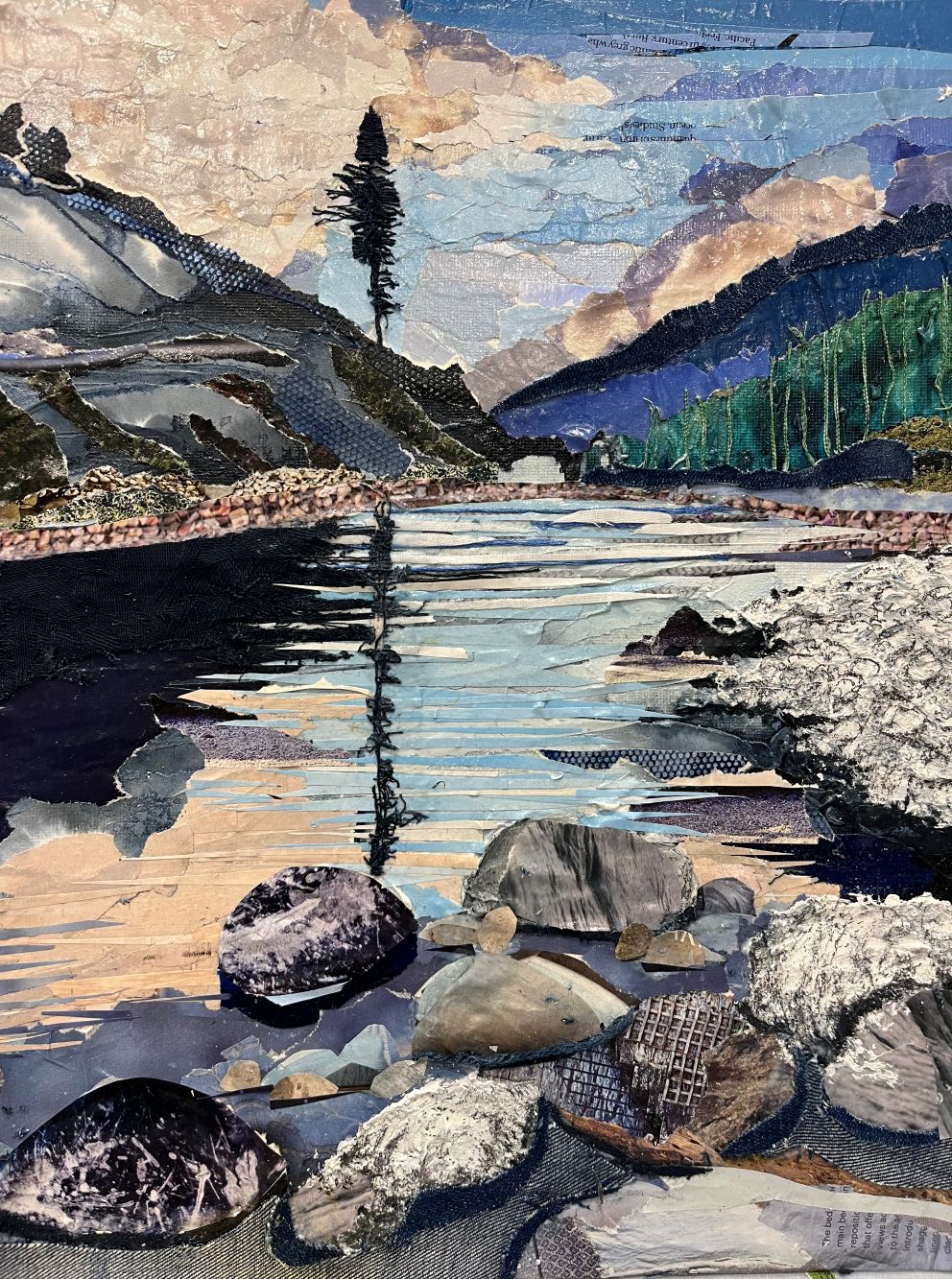
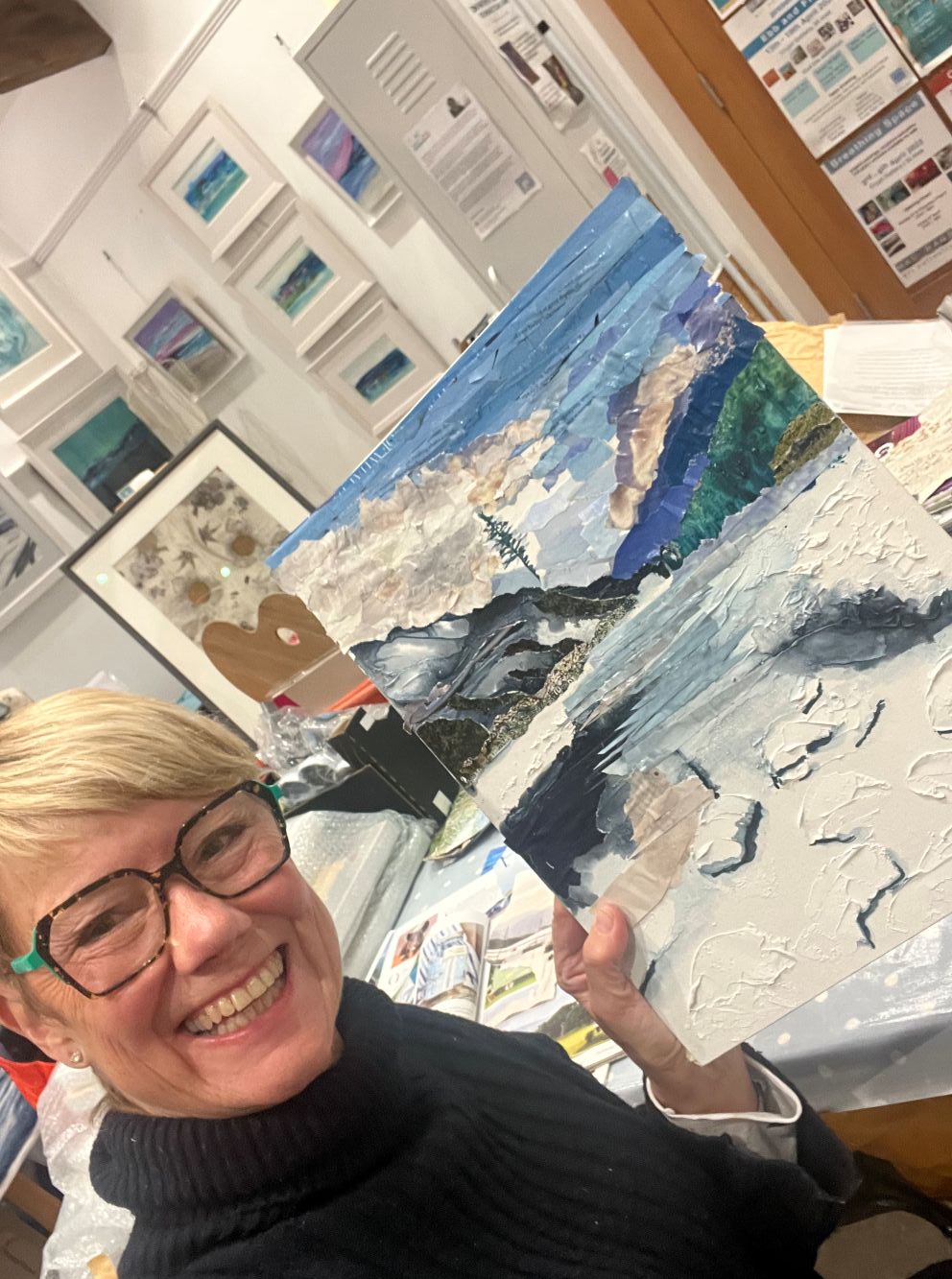
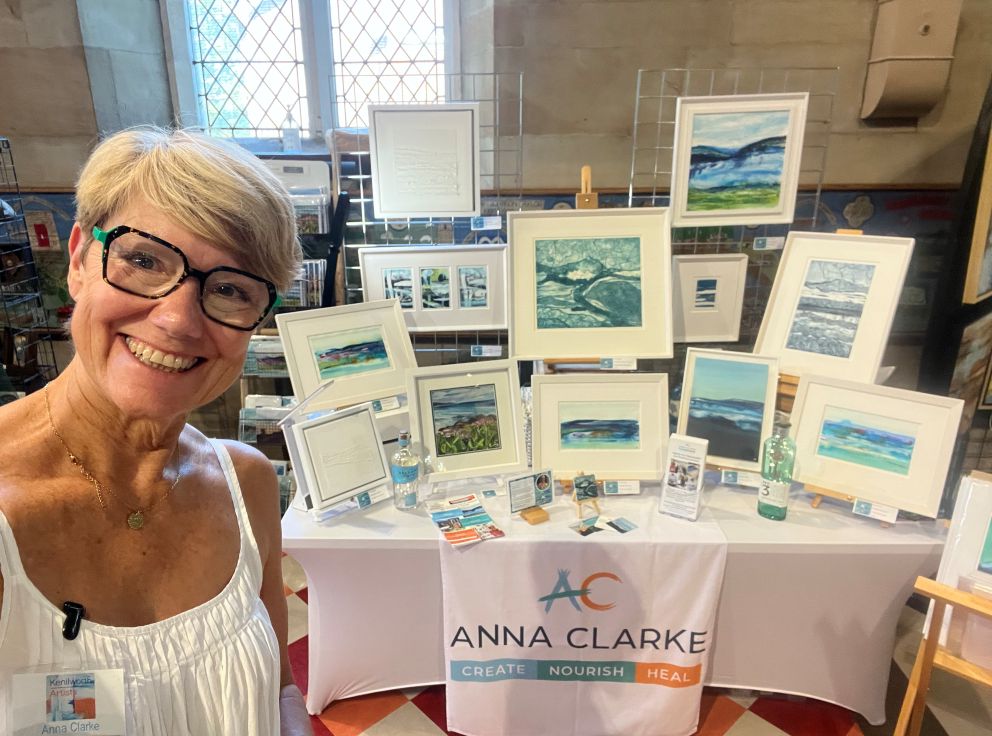
In my coastal paintings and recent Himalayan Mountain series, I explore the colours, shapes and textures of the landscape, capturing not just what I see but also how a place makes me feel. Through my mixed-media work, I hope to encourage people to pause, look a little closer and perhaps see something familiar in a new way.
LSA: You’ve spent many years returning to St Ives, particularly the Porthmeor studios overlooking the sea. What is it about that place that continues to draw you back, both personally and creatively?
St Ives has become a very special place for me, both personally and creatively. There is something about the light, the sea, the rugged coastline and the ever-changing colours of the landscape that keeps drawing me back. I find the textures and contrasts endlessly inspiring, from the turquoise water and sandy beaches to the dark rocks and weathered surfaces.
The Porthmeor Programme at the St Ives School of Painting was a pivotal moment in my artistic journey. After leaving my corporate career in fashion at TU Clothing, I embarked on a one-year programme alongside seven other artists. It gave me the space and encouragement to experiment, take risks and begin finding my own creative voice.
That shared experience led to the formation of our art collective, MAC RAGS, a group of seven artists who continue to share a creative connection. We now exhibit annually in St Ives at the historic Crypt Gallery, which makes returning to the town even more special.
St Ives represents freedom, friendship, inspiration and the courage to take a different path. Returning there reconnects me with the place where my artistic journey really began, and there is always something new to discover in a landscape that is never quite the same twice.
LSA: Your background is in fashion and textiles, where creativity often has a commercial purpose. How does your approach differ when you’re creating artwork purely on your own terms?
My years in fashion retail gave me a strong appreciation of colour, texture, textiles and how things are made. I spent over 30 years in the industry, including my time at TU Clothing, where creativity often had to work within commercial briefs, trends and customer expectations.
Making art on my own terms is wonderfully liberating. I can follow an idea simply because it interests me, experiment without knowing exactly where I am going, and allow a piece to evolve organically. There is no requirement for it to fit a trend or appeal to a particular market.
My fashion background is still very much part of who I am as an artist, particularly in my love of textiles, repurposing and sustainability. My passion for slow fashion and giving clothing a second life has developed into two complementary strands of my work: Rags to Treasure, my workshops exploring upcycling and eco-painting on clothing, and Let’s Create and Reuse, which focuses on engaging and educating young people about sustainability through creative reuse.
For me, creativity is about more than the finished piece. It is about the story behind the materials, the memories they hold and the possibility of transforming something old or discarded into something beautiful and meaningful.
LSA: You describe your time on the Porthmeor Programme as instrumental in finding your creative voice. What does having your own artistic voice mean to you, and how do you recognise it in your work?
Finding my creative voice was about learning to trust myself and letting go of the need to get everything right. The Porthmeor Programme gave me the confidence to experiment, make mistakes and discover what genuinely excited me as an artist.
Having my own artistic voice means creating work that feels personal and authentic, rather than trying to paint or make what I think I should. I recognise it in my instinctive use of colour, my love of texture and layers, and my attraction to landscapes that hold an emotional connection for me.
I also think my voice comes through in my interest in sustainability and the stories that materials can hold. Whether I am painting a coastal landscape or transforming discarded clothing into art, I am drawn to finding beauty and meaning in unexpected places.
My work continues to evolve, but there is a thread running through it all: a curiosity about the natural world, a love of materials and a desire to create something that feels meaningful. I am still discovering my voice, and that is part of what makes the journey so exciting.

LSA: What draws you to mixed media, and how do the different materials you work with shape the direction of a piece?
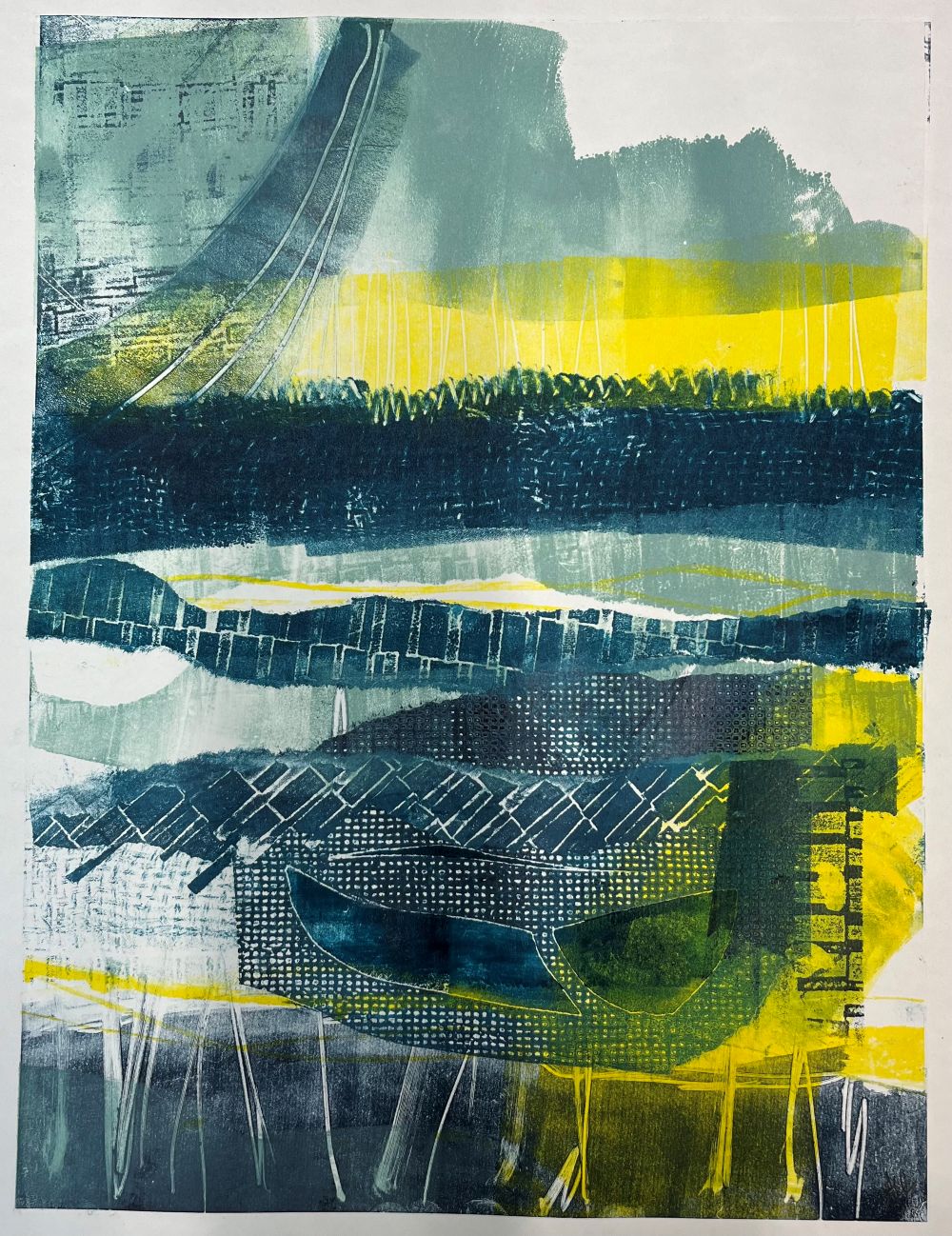
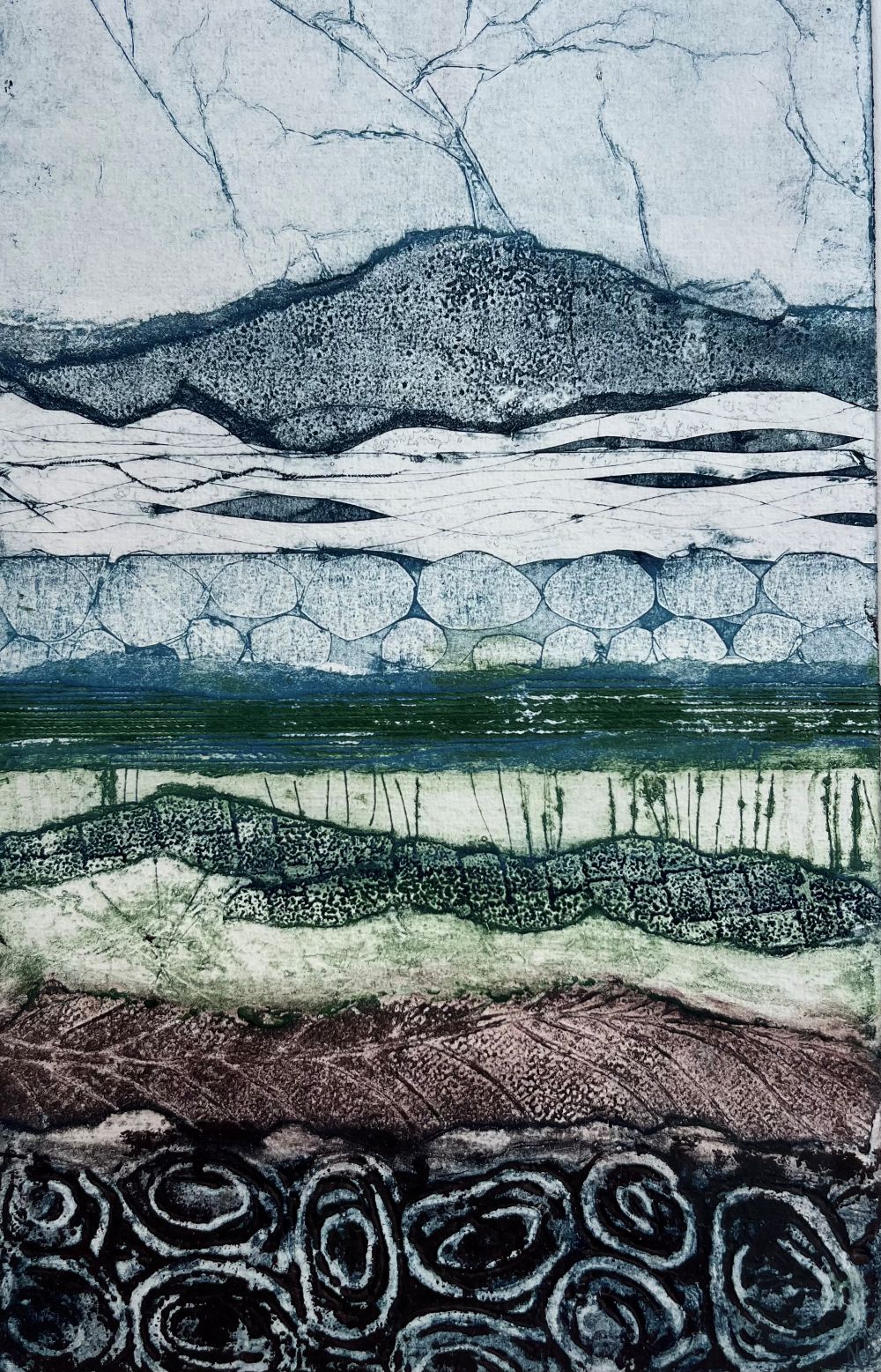
I love mixed media because it allows me to be curious, playful and experimental. I am drawn to the textures and colours found in nature, and I enjoy finding different ways to interpret them through paint, collage, collagraph and eco-printing.
Working with different materials means a piece can develop in unexpected directions. A layer of paint might suggest a new shape, a fragment of paper might introduce a different story, or a particular texture might remind me of a rock formation, a shoreline or a mountain landscape.
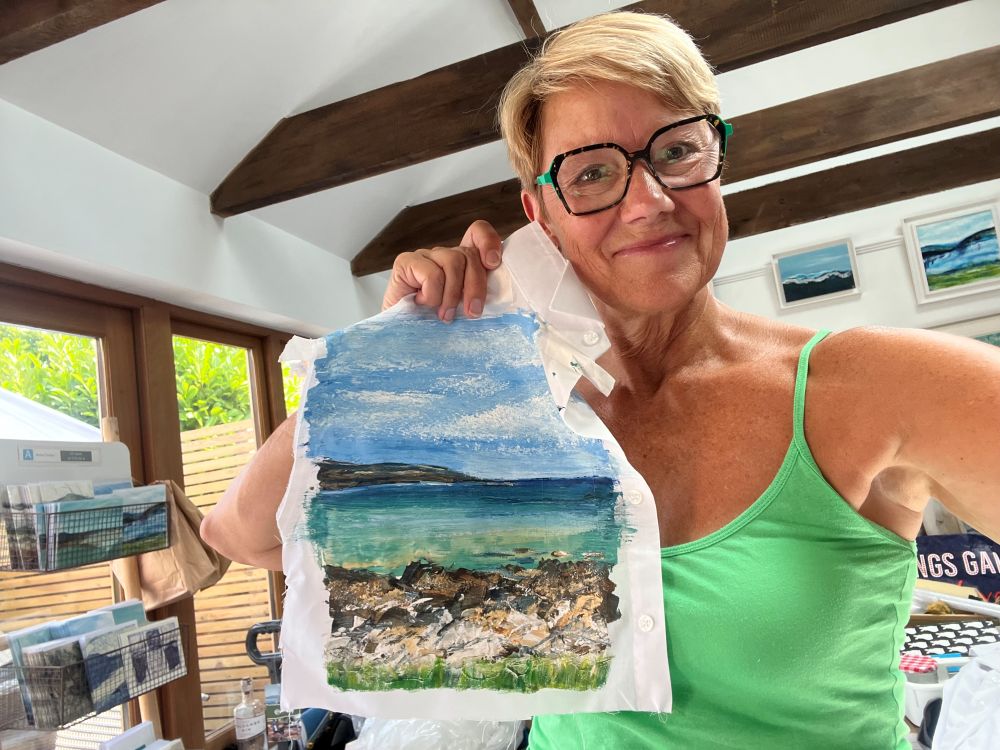
Textiles are particularly important to me because of my background in fashion and my belief that clothing can have a life beyond its original purpose. This has inspired Rags to Treasure, where I explore upcycling and eco-painting directly onto clothing, transforming garments into individual, wearable pieces of art.
I run these workshops at Art in the Park and from my Coach House studio, sharing the joy of creative reuse and encouraging people to look at their wardrobes and unwanted garments differently.
My wider sustainability project, Let’s Create and Reuse, takes this ethos into schools and local communities, inspiring young people to make art from discarded clothing and denim while learning about the environmental benefits of upcycling.
LSA: Windows can offer a view outwards, but they can also invite us to look in. How do you think about the relationship between what is visible and what remains unseen in your work?
I think there is often much more to a painting than the view it presents. A landscape might appear to be simply a place, but for me it can also hold memories, emotions and a sense of belonging.
This relationship between what is visible and what lies beneath the surface became especially meaningful after I lost my father. I began painting memorable scenes from our shared holidays onto his sailing clothes, transforming garments that held personal significance into lasting reminders of the time we had shared.
The process became a way of navigating grief and keeping those memories alive. It helped me discover that creativity can offer comfort and allow us to express feelings that are sometimes difficult to put into words.
That experience inspired my Rags to Treasure workshops, where I explore upcycling and eco-painting on clothing. I love the idea that a garment can hold a story, and that rather than discarding it, we can transform it into something personal and meaningful.
For me, the unseen story behind an object can be just as important as what we see on the surface. Whether I am painting a landscape or creating art on clothing, I hope there is room for memories, emotions and individual interpretations to emerge.
LSA: Looking back at your journey as an artist, have there been any unexpected influences, discoveries or turning points that have changed the way you approach your work?
Leaving my corporate career in fashion and joining the one-year Porthmeor Programme at the St Ives School of Painting was one of the biggest turning points in my life. Working alongside seven other artists gave me the space to experiment, develop my confidence and begin finding my own creative voice.
Another deeply personal turning point was losing my father. I painted memorable scenes from our shared holidays onto his sailing clothes, transforming garments that held precious memories into something lasting. What began as a personal way of processing grief became an unexpected discovery: creativity could help me make sense of loss while preserving the stories and connections that mattered most.
That experience became the inspiration for Rags to Treasure, my workshops in upcycling and eco-painting on clothing. I now share this approach at Art in the Park and from my Coach House studio, encouraging people to transform garments into individual pieces of wearable art rather than letting them go to waste.
LSA: How has working in the LSA Art Room influenced your creative process, and has anything surprised you about the experience so far?
Being part of the LSA Art Room and the wider Leamington Studio Artists community has given me a wonderful opportunity to connect with other creatives locally. After spending so much time developing my practice through independent exploration and my visits to St Ives, it is lovely to have a local artistic home where ideas, encouragement and inspiration can be shared.
I find being surrounded by other artists energising. Everyone brings a different perspective, approach and set of experiences, and that exchange can open up new ways of thinking about your own work.
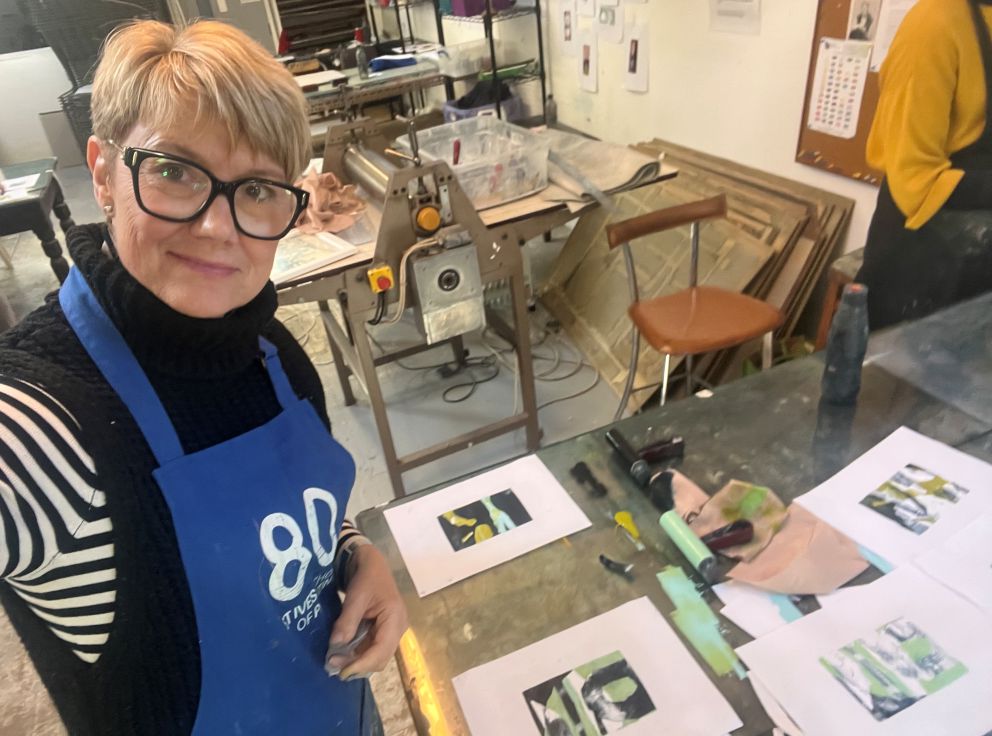
Since joining LSA, I have particularly enjoyed taking part in two of the Focus Week exhibitions, exploring Printmaking and Textiles alongside like-minded artists. Both have been wonderful opportunities to try new things, share ideas and discover different approaches to materials and techniques. Being exposed to other artists’ ways of working has expanded my horizons and encouraged me to think beyond my usual creative practice.
Perhaps the biggest surprise has been just how much confidence and inspiration can come from being part of a creative community. Joining LSA, alongside Kenilworth Artists, has helped me feel more connected, supported and willing to share my work. It has reminded me that we are all learning and evolving, whatever stage we are at, and that being an artist doesn’t have to be a solitary journey.
Whether I am exhibiting with MAC RAGS in St Ives, exploring new techniques with LSA or running sustainability workshops through Rags to Treasure and Let’s Create and Reuse, I have discovered that creativity is about much more than making art. It is also about connection, shared learning and inspiring one another.
I am delighted to be part of the LSA community and look forward to continuing to explore, exhibit and grow alongside fellow artists.