
The place might be the starting point, but the feeling behind a painting is often much more personal.
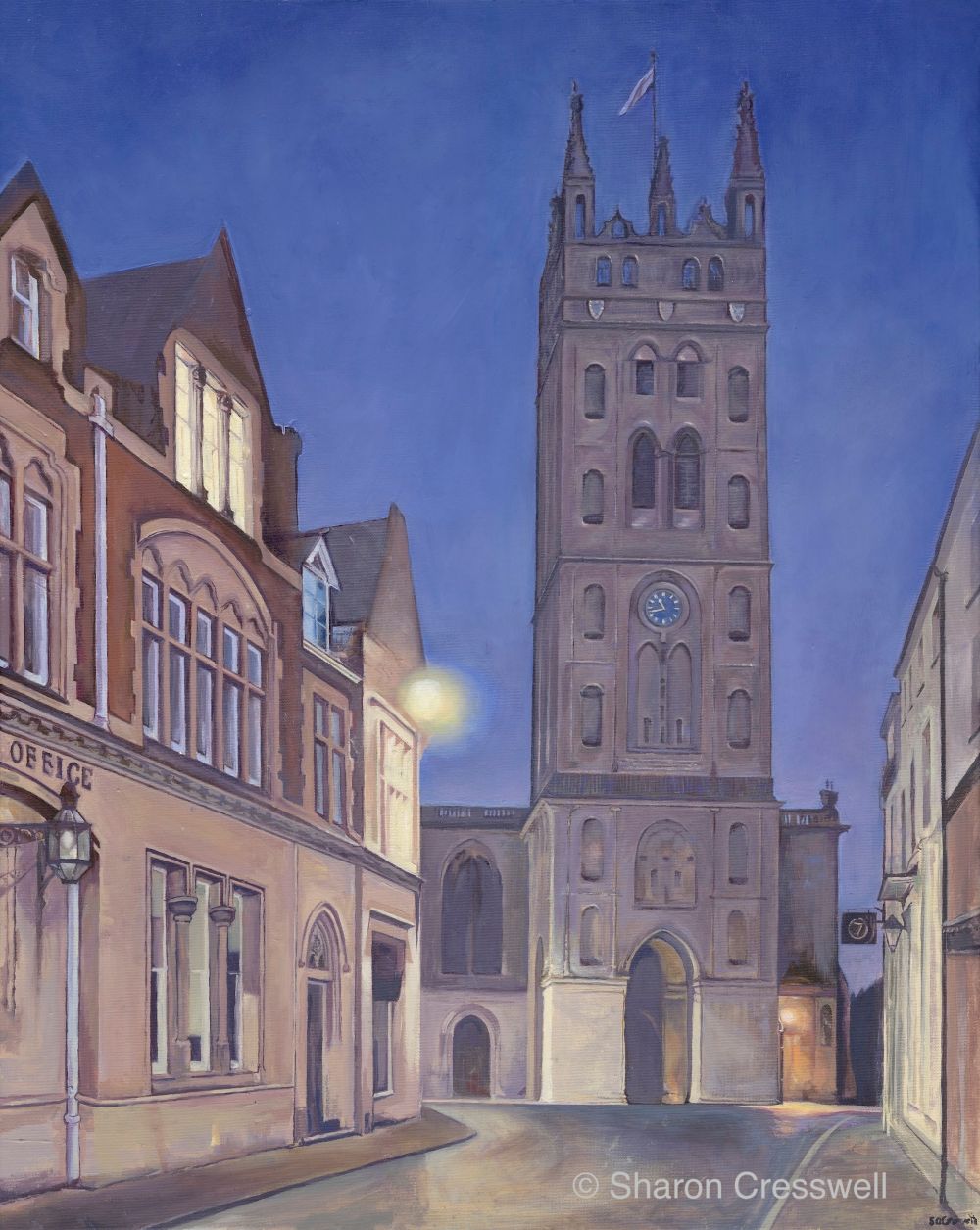
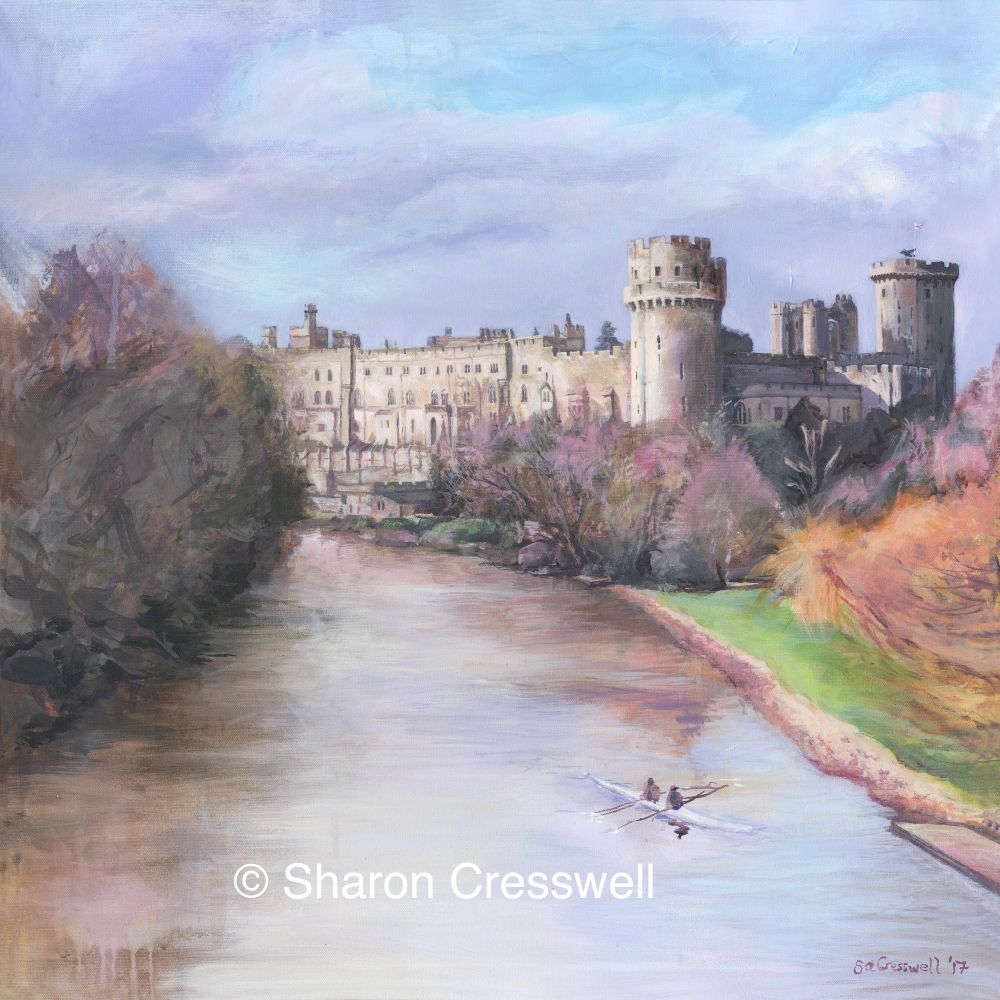
Inspired by light, atmosphere and the familiar streets and landscapes of Warwick and Leamington, Sharon Cresswell’s paintings capture more than a place. They reflect fleeting moments, personal memories and the feeling of being there.
In this Artist Spotlight, Sharon talks about her early introduction to painting, the influence of her artist father, her return to art after time away, and how familiar places, changing light and everyday experiences continue to shape her work.
LSA: You grew up watching your father, who was a commercial artist, at work. What are your earliest memories of painting, and how much of his influence do you recognise in the artist you are today?
My earliest memory (maybe 3 or 4) is that he would sometimes let me paint a bit of the picture he was working on (I’m not sure anyone ever knew that!), something very simple such as colouring something in. I remember it was one of my favourite things to do – watching him paint, and I would just sit there for hours watching.
His style was more realistic and detailed than mine, but I do see the core skills and techniques I use in my work as coming from him. It’s really the basis of my painting approach, but then I deviate somewhere else.
If you google ‘Ray Cresswell’ you’ll see a lot of his work, he did a lot of puzzles in his later years.
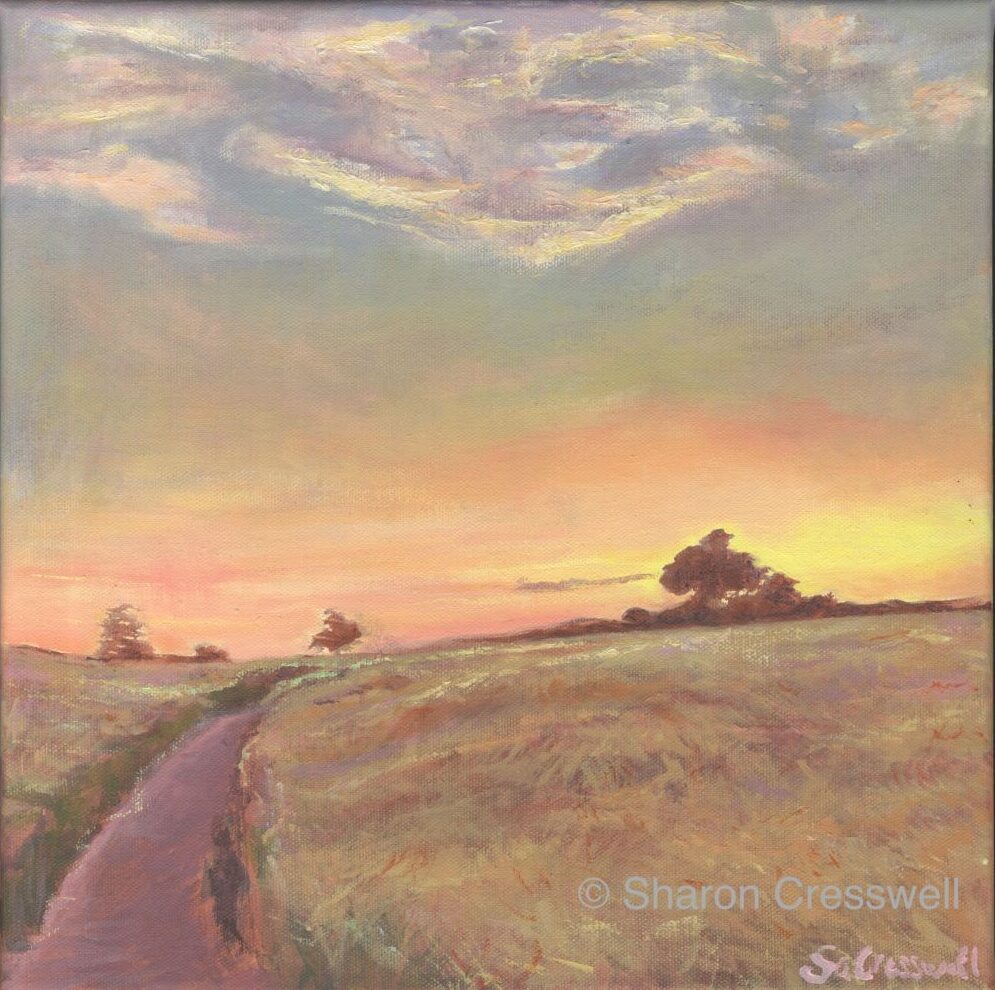
LSA: Light plays a huge part in your paintings, particularly those fleeting moments around sunrise, sunset and changing weather. What is it about these moments that makes you want to capture them?
It’s the way the colour changes and suddenly everything seems to belong to the same palette. Colours move around the scene and bounce off each other, so that the whole thing feels connected and quite different from how it normally looks. It’s difficult to explain, to be honest!
I love it when a colour scheme has just a few key muted notes that sing together.
LSA: Warwick and Leamington feature prominently in your work. What draws you to painting familiar local streets and landmarks, and what makes you stop and think, “I need to paint that”?
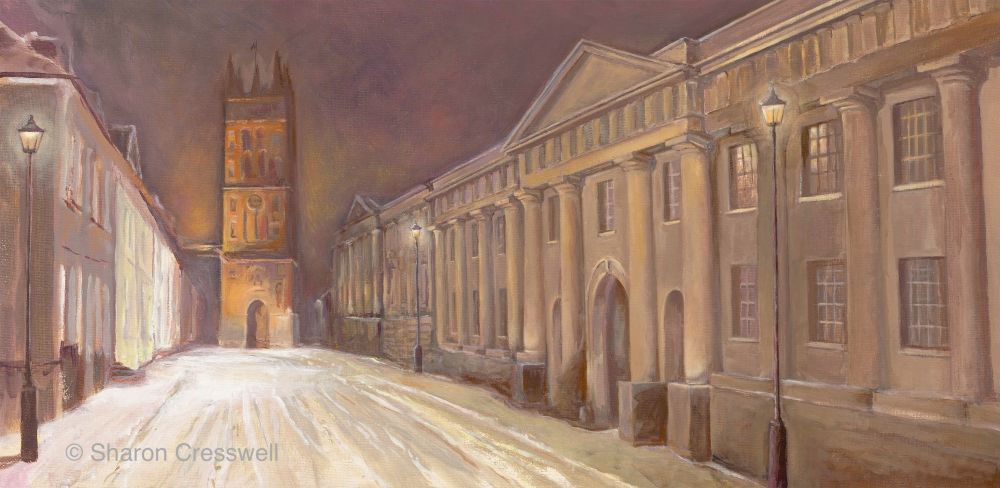
I just observe a lot, and sometimes I get a moment where I think, there it is! – I have to paint it. It might be because everything suddenly looks beautiful and kind of the truest version of itself, or because a particular mood has been created – early morning fog, for example, or the stillness of a snow scene.
I also love history, so I’m drawn to the nostalgic quality of old buildings.
LSA: Your street scenes often have a strong sense of atmosphere, whether it’s the glow of a winter sky or a familiar building transformed at night. Are you trying to record a place as it is, or capture how it feels to be there?
I’m trying to capture how it feels to be there.
LSA: You trained in art before moving into Communications and animation, and then spent a long period away from making art. What prompted you to return to painting around ten years ago?
The urge was always within me during the time out, but when I moved to Leamington I had more time to start painting again. There is a benefit of having a break and it felt like my style had still developed during the time I wasn’t painting.
LSA: Your student animation was award-winning and screened internationally. Has your background in animation influenced the way you think about composition, movement or storytelling within a single painted image?
Not especially, but it’s strengthened a core principle that I learned at art college – to have a vision and commit to it. Don’t be scared to make it too perfect; make each piece an exploration and bring passion to it.
LSA: You work mainly in oils, occasionally incorporating mixed media. What is it about oils that particularly suits the way you work with light, colour and atmosphere?
I’m fairly new to oils; many of my landscapes have been acrylic. I’m still learning how best to use them, but as I use water-based oils, I’m able to work quite loosely with layers and let the painting emerge. I have an idea of how it’s going to look, but really it develops as I work, with the little imperfections that happen along the way becoming part of the painting.
I also love texture and worked a lot with mixed media in the past, so I’m looking forward to using oil in a more textural way. And perhaps bringing mixed media back.
I also paint portraits and pet portraits, and I’m starting to make these more sketchy and expressive using pastel and charcoal.
LSA: Your professional career is in technology, which seems quite different from your painting practice. Do those two sides of your life remain completely separate, or does one influence the other?
I am a software tester, which requires good attention to detail and patience – so there is a really big cross over with painting surprisingly. I might be the only person who thinks so though 🙂
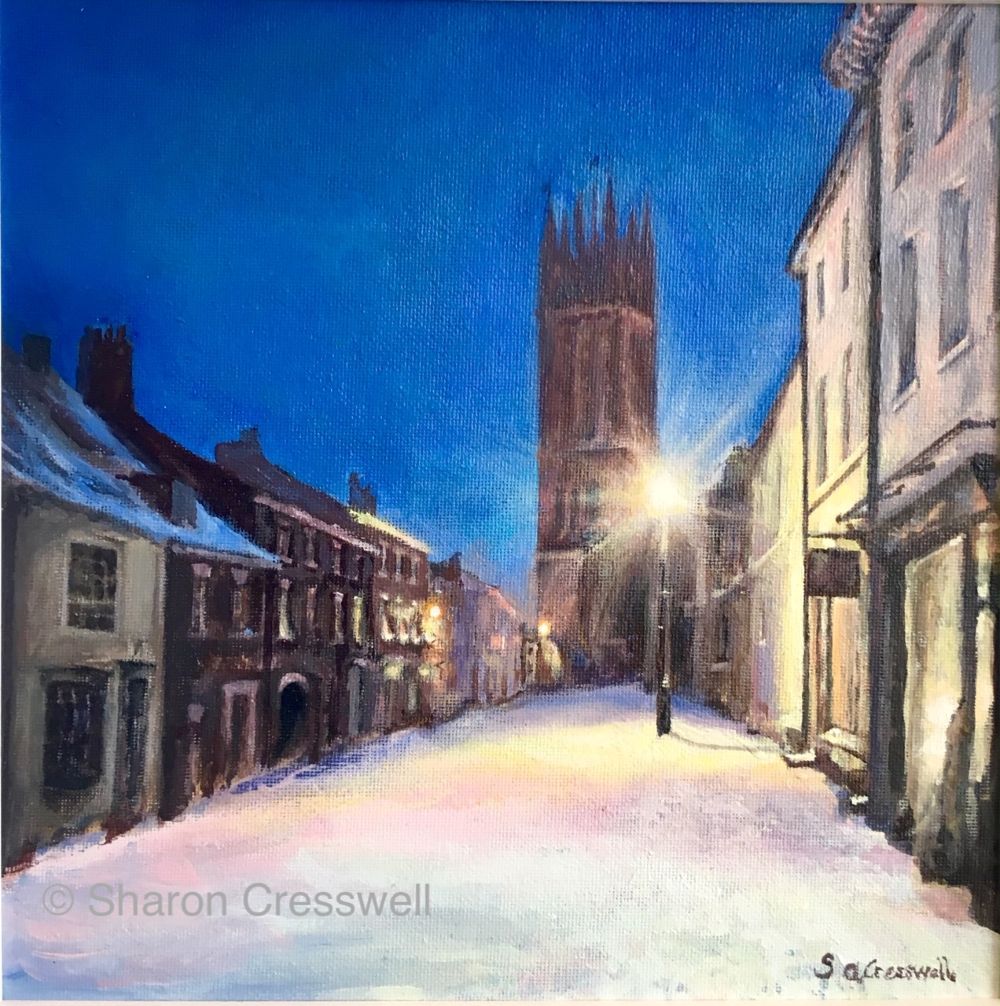
LSA: Your work often focuses on places people might pass every day without really noticing. Do you hope your paintings encourage people to look differently at the familiar landscapes and streets around them?
I think people generally love this area. I’m not trying to make people look at things differently, just to enjoy how pretty the area is – even the ordinary streets, not just the obvious landmarks.
LSA: You describe painting as both intuitive and essential. What does having that creative outlet give you, and how has your relationship with painting changed since you returned to it?
Painting is very instinctive for me and comes from within. I make all the decisions myself, and I really enjoy having that freedom. It gives me a space where I can just follow my own ideas and see where they take me.
I’m also planning to do an abstract series as a bit of an experiment, which I’m looking forward to.
LSA: You’ll be Artist in Residence during Fragments of Memory. How does the exhibition theme connect with your own work, particularly your paintings of familiar places and moments in Warwick and Leamington?
I think there is a connection to memory in the way I paint. I paint glimpses of what I see – moments in time – and what is happening in my life at the time can become part of the work. The place might be the starting point, but the feeling behind a painting is often much more personal.
So when I look back at my paintings, I don’t just see the places. I see the feelings and experiences that were part of that moment too.